Rec Room
A 1970s Fever Dream in Stripe and Circle
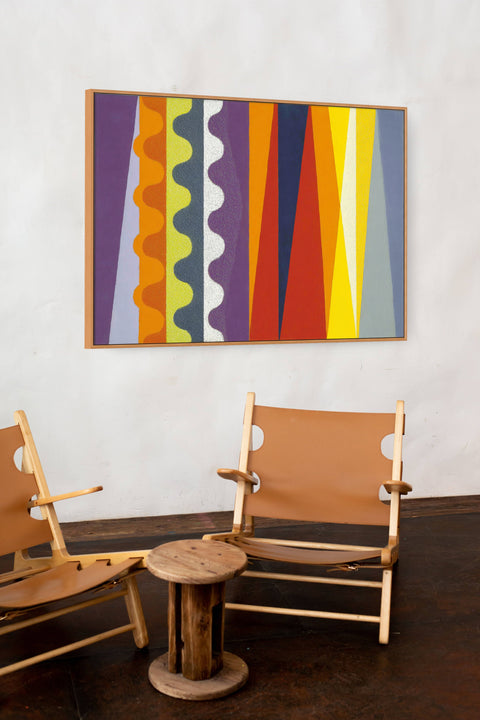
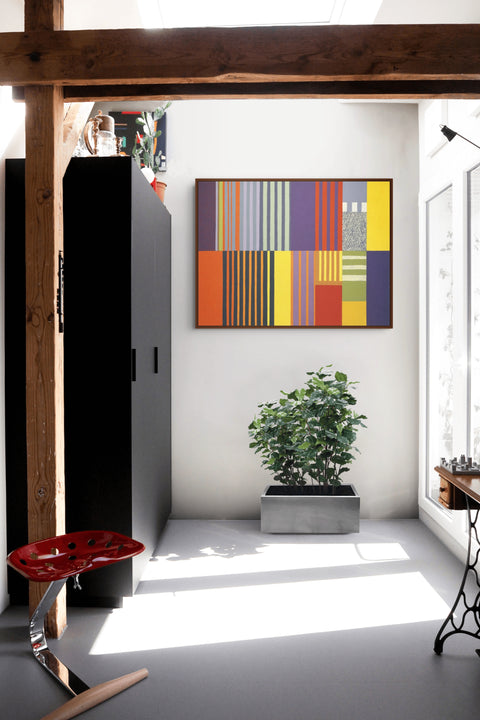
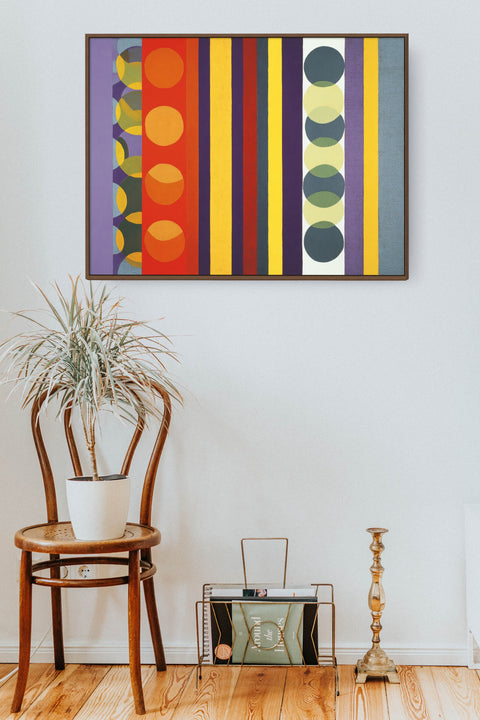
Rec Room imagines these paintings not as a wall in a gallery but as a lounge someone built in 1974 and never redecorated; a little loud, deeply confident, and completely unbothered by whether it's aged well.
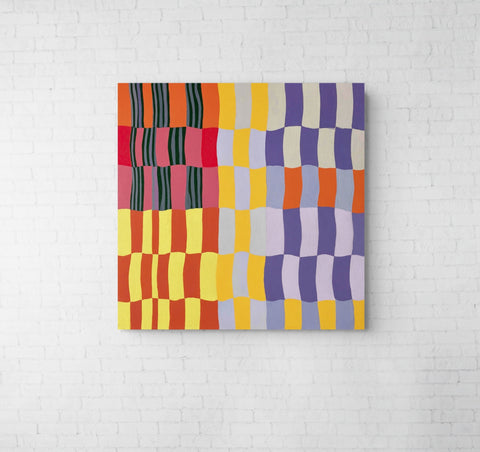
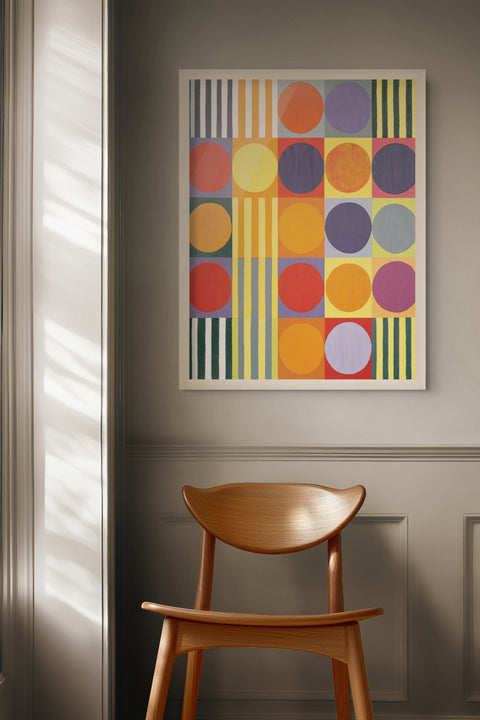
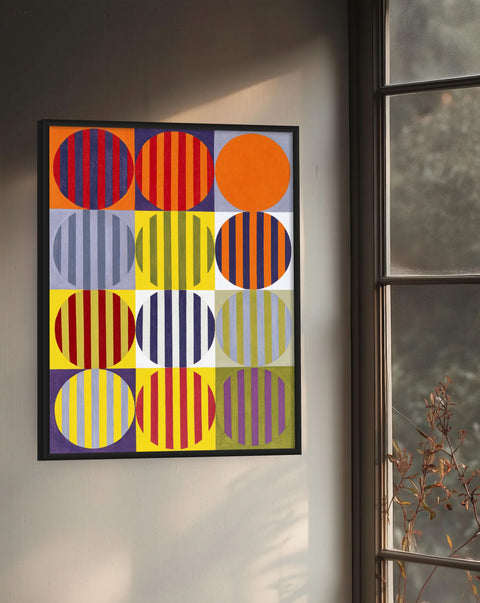
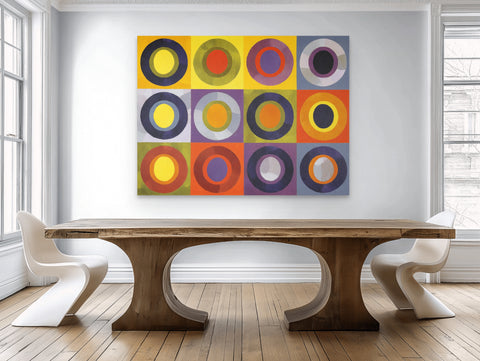
Rec Room is a collection of hand-painted, retro-inspired wall art built around one loud, confident decade: the 1970s. Bold stripes, spinning circles, and a palette of burnt orange, harvest gold, olive, and eggplant; sunburst clocks, mirror-ball light, vinyl record sleeves, and shag-rug texture, all translated into original geometric paintings.
THE FULL ARC
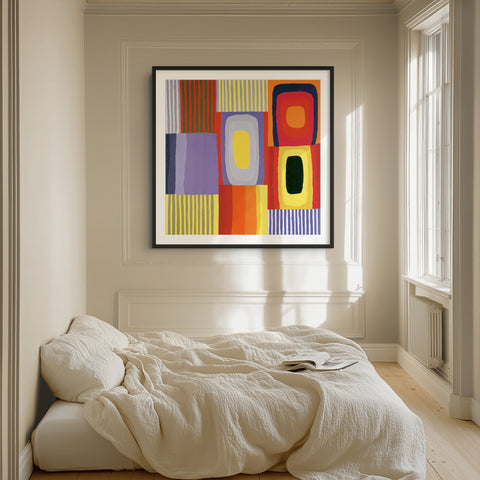
Rec Room is complete at eight. Read together, in order, the collection stops being eight separate paintings and becomes a single evening.
1. Studio 54 — The doors open. Every corner of the room is already lit for a different mood, before anyone's picked where to stand.
2. Jukebox — The first coin drops. Someone picks the song that sets the tone for the whole night.
3. Disco Ball — The dance floor fills. Every panel catching its own piece of the spotlight, spinning, lit differently.
4. Boogie Nights — Somewhere past midnight, the room stops checking the actual clock.
5. Mood Ring — The night shifts temperature. Warm in one corner, cooler in another.
6. The Shag — Things slow down. Someone sits down on the floor. The loudest part of the night is already behind it.
7. The Record Crate — The last record goes on. Nobody's dancing anymore, just listening.
8. Sunset Strip — The last light fades from warm to cool. One stretch of the room still glowing after everyone else has let go of the night.
That's the collection: not a wall of eight unrelated paintings, but one long, loud, warm evening — arriving, dancing, softening, and finally, gently, letting go.
Hanging Recommendation
Hang Rec Room the way you'd furnish an actual room, not a gallery wall: “Studio 54” and “Jukebox” as entry points. “Boogie Nights” and “Mood Ring” as anchor pieces near seating. “The Record Crate” and “Disco Ball” low and horizontal, like things you'd flip through or spin rather than look up at. “The Shag” felt more than seen. “Sunset Strip” last, angled toward the room's light source, so its triangles catch real light the way an actual sunset would.
Warm, low lighting rather than gallery-white light; this collection wants lamplight, not spotlights.